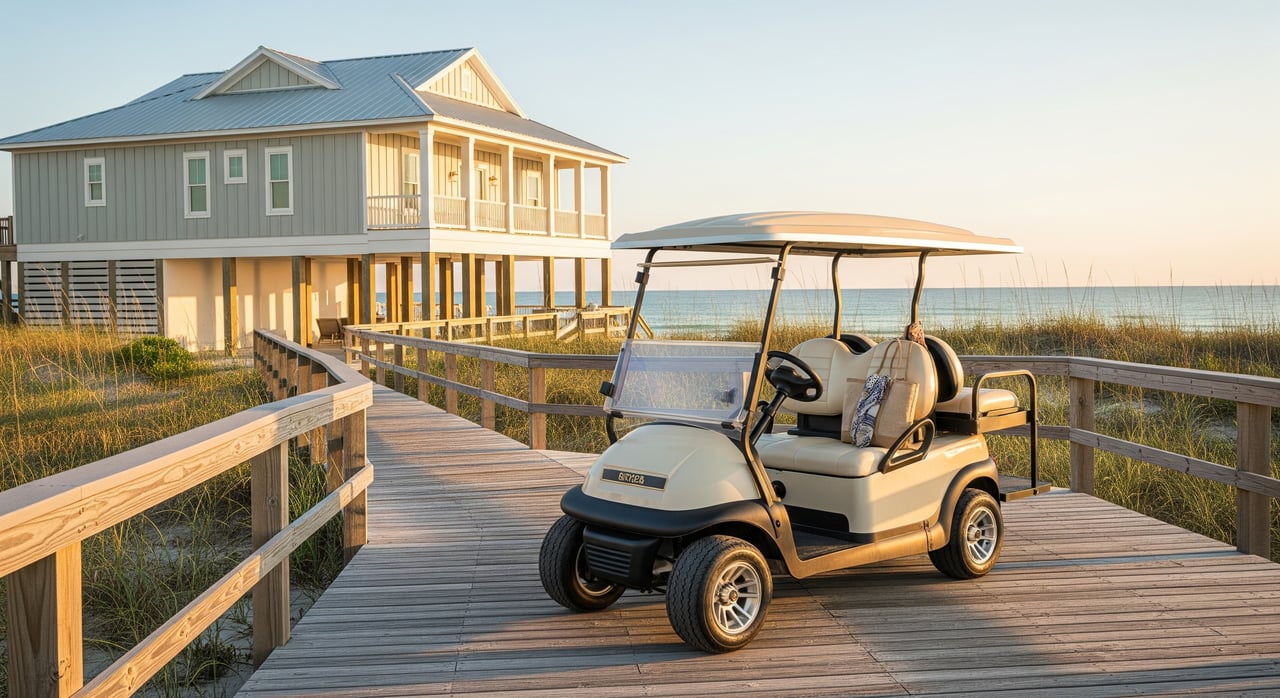
Thinking about cruising to the beach by golf cart and skipping the parking scramble? If you are buying in Destin, understanding where carts can roll and how beach access works will shape your day-to-day routine. You want that easy, beach-town rhythm without surprises. In this guide you’ll learn the rules, the most practical areas for carts, beach access and parking basics, HOA considerations, and a simple checklist to use before you buy. Let’s dive in.
Golf cart rules in Destin
Golf cart use on public streets is decided locally. Florida sets the overall framework, but cities and counties choose where carts are allowed, what equipment is required, and which streets are off-limits. That means rules can change from one neighborhood to the next, so you always need to verify your route.
Start with the basics. The Florida Department of Highway Safety and Motor Vehicles explains how golf carts and low-speed vehicles (LSVs) are treated and what operators should know. Review state-level guidance on golf carts and LSVs from the Florida Department of Highway Safety and Motor Vehicles. For broader roadway context, check the Florida Department of Transportation for how roads are classified and where nonstandard vehicles may have restrictions.
Locally, authorized streets, speed limits, and equipment requirements vary. Some areas require headlights, taillights, turn signals, and seat belts if you are on designated public streets. Registration and insurance can also differ if your cart is converted to an LSV. When in doubt, confirm local rules directly with the City of Destin and Okaloosa County. For county-maintained access points and parking rules, start with the Okaloosa County official site.
Two quick truths to keep in mind:
- Only certain streets typically allow carts. What is fine in one community may be prohibited a few blocks away.
- Enforcement usually ramps up during peak season, so plan to follow posted signs closely.
Where carts make sense in Destin
Carts shine for short trips. Many buyers love using them for quick beach runs, grabbing lunch on the harbor, or getting to marinas and neighborhood amenities without moving a car.
You will likely find carts most practical in:
- Barrier-island neighborhoods and island-style pockets where sand, restaurants, and marinas are 1 to 2 miles or less. Holiday Isle and parts of the Destin Harbor area fit this pattern in many blocks.
- Gated or private communities designed for low-speed circulation where carts are allowed on internal roads and storage or charging is available.
- Condo and townhome clusters where short walks or cart rides connect parking or driveways to a nearby beach access.
- Resort or hospitality corridors with tight parking and heavy visitor traffic, where carts reduce friction for short errands.
Carts are not ideal when:
- Your regular routes include arterial roads with higher speed limits or where local rules do not allow carts.
- Distances are long, grades are steep, or you do not have approved cart routes.
- Your HOA prohibits carts or offers no secure storage or charging.
Think range and speed. Many street-authorized carts or LSVs travel about 20 to 25 mph and are built for short, local trips. That is perfect for a quick loop to the beach, but not a cross-town commute. Match your cart type to your everyday routes.
Beach access and parking basics
In Destin and Okaloosa County you will encounter two types of beach access:
- Public beach access. City or county-maintained crossovers and parking lots open to the public. Hours, parking rules, and permitted activities are posted at each access.
- Private beach access. Condos and subdivisions often maintain private access points for residents and guests. If a property advertises private or deeded access, ask to see the documentation and confirm how you reach the sand.
Parking near popular beaches is limited and fills fast, especially in peak season. Expect small municipal lots, metered or time-limited spaces, and private paid lots. Some areas offer resident permits or sticker programs, while others are first-come, first-served with paid parking. Always follow posted signs to avoid tickets or towing. For maps and parking guidance, start with county resources on the Okaloosa County website.
Boardwalk and dune etiquette
Boardwalks, dunes, and pedestrian crossovers are for people on foot. Motorized vehicles, including golf carts, are typically not permitted on boardwalks or dune crossovers for safety and dune protection. Expect to see clear signage.
A few simple etiquette reminders:
- Yield to pedestrians and keep speeds very low in shared areas.
- Do not block crossovers or access points when loading or unloading.
- Never drive across dunes. Dune protection rules carry heavy fines and strict enforcement.
About driving on the beach
Beach driving is not common in Okaloosa County’s popular swimming and tourism beaches. Where beach driving is allowed in Florida, it generally requires permits, specific equipment, and designated entry points. If this is important to you, verify local rules with official sources before you plan any vehicle access on sand.
Safety and seasonal tips
Carts and people mix in beach towns, so safety comes first. Use proper lights at night, obey posted speeds, and give pedestrians plenty of room. In high-traffic zones, walking can be faster than driving.
Seasonal crowding affects both parking and enforcement. During busy weeks, plan for earlier starts, patience at crosswalks, and the possibility of walking the final stretch to the beach. If you are using a cart, choose routes that minimize crossing major roads and stick to authorized streets.
HOA, condo, and property checks
Rules vary widely by community. Some HOAs welcome carts and even provide charging areas. Others limit hours, require registration with the association, or prohibit carts altogether. The only way to know is to read the covenants, conditions, and restrictions and any recent amendments.
Before you buy, confirm:
- Whether the HOA or condo allows golf carts and where they can travel inside the community.
- Where carts can be parked or charged. Look for garage space, covered storage, or a dedicated outlet.
- Guest policies if you plan to allow family or renters to use your cart.
On insurance and registration, requirements depend on use. Private-property-only carts are often treated differently than LSVs authorized for public roads. Review state guidance from the Florida Department of Highway Safety and Motor Vehicles and confirm local rules before you purchase. Many owners also choose liability coverage for peace of mind when guests or teens will operate the cart.
Battery type matters for storage. Lead-acid batteries need ventilation and regular maintenance. Lithium batteries can reduce maintenance and may offer better range, though costs vary. Match your choice to your storage setup and typical use.
How carts affect daily life and resale
For many lifestyle buyers, the ability to hop in a cart for a quick beach run is a daily joy. Homes with straightforward access and permitted cart routes often feel more convenient and can be more attractive to lifestyle-focused buyers.
That said, there is no one-size-fits-all answer. If a community bans carts or lacks storage, you may prefer a property closer to a public access, or one with deeded private access. The best fit is the home that matches your routines, storage needs, and preferred routes.
Buyer checklist to use now
Use this quick checklist as you compare properties:
- Verify the specific streets you plan to use are authorized for golf carts. Confirm with local officials and review ordinances.
- Get the HOA or condo CC&Rs and any amendments that address carts. Ask for written clarification on parking, charging, and guest use.
- Confirm whether the property includes legal public or private beach access and what the walk or cart route looks like.
- Check parking at the beach accesses you will use. Ask about permits, fees, and seasonal rules.
- Verify whether registration or insurance is required for your cart type if you plan to use public streets. Start with FLHSMV guidance and local ordinances.
- Ensure you have secure storage and a nearby outlet for charging.
- If family or guests will use the cart, talk to your insurer about liability coverage and operator requirements.
- Before you buy a cart, rent one locally for a day to test range, comfort, and routes.
Get local guidance before you buy
If a golf-cart-and-beach lifestyle is high on your list, the right property and community rules will make all the difference. We can help you pinpoint homes with convenient access, cart-friendly streets, and the storage you need, then verify the details with local sources so there are no surprises on move-in day.
Ready to explore cart-friendly homes and beach access options around Destin and Okaloosa County? Let’s design your search around the everyday routine you want. Connect with Christine Fox for local guidance and a calm, concierge-style path to the coast.
FAQs
Can I drive a golf cart on Destin public streets?
- Possibly. Only streets specifically authorized by local ordinance allow golf carts. Always confirm your exact route with city or county resources and follow posted signs.
Do Destin boardwalks allow golf carts or scooters?
- Typically no. Boardwalks and dune crossovers are designed for foot traffic and are off-limits to motorized vehicles for safety and dune protection.
Is beach driving allowed in Destin or Okaloosa County?
- It is uncommon. Vehicle access on sand is tightly regulated in Florida and usually requires explicit permission and permits. Check official rules before planning any beach driving.
Do I need a driver’s license or insurance for my cart?
- Requirements depend on how and where you use it. LSVs on public roads may require registration and insurance. Review state guidance from FLHSMV and verify local ordinances.
Will my HOA or condo allow golf carts?
- Maybe. HOA and condo rules vary widely. Read the CC&Rs, ask for written confirmation on parking and charging, and review any restrictions on routes and hours.
Where can I park near Destin public beach access points?
- Expect small public lots, time-limited spaces, and private paid lots. Some areas offer resident permits. Follow posted signs and check maps on the Okaloosa County site for up-to-date guidance.